Three forces are emptying Canberra's bricklaying trade: why Tanzanian builders should take note
News · 2026-08-24 · 4 min read
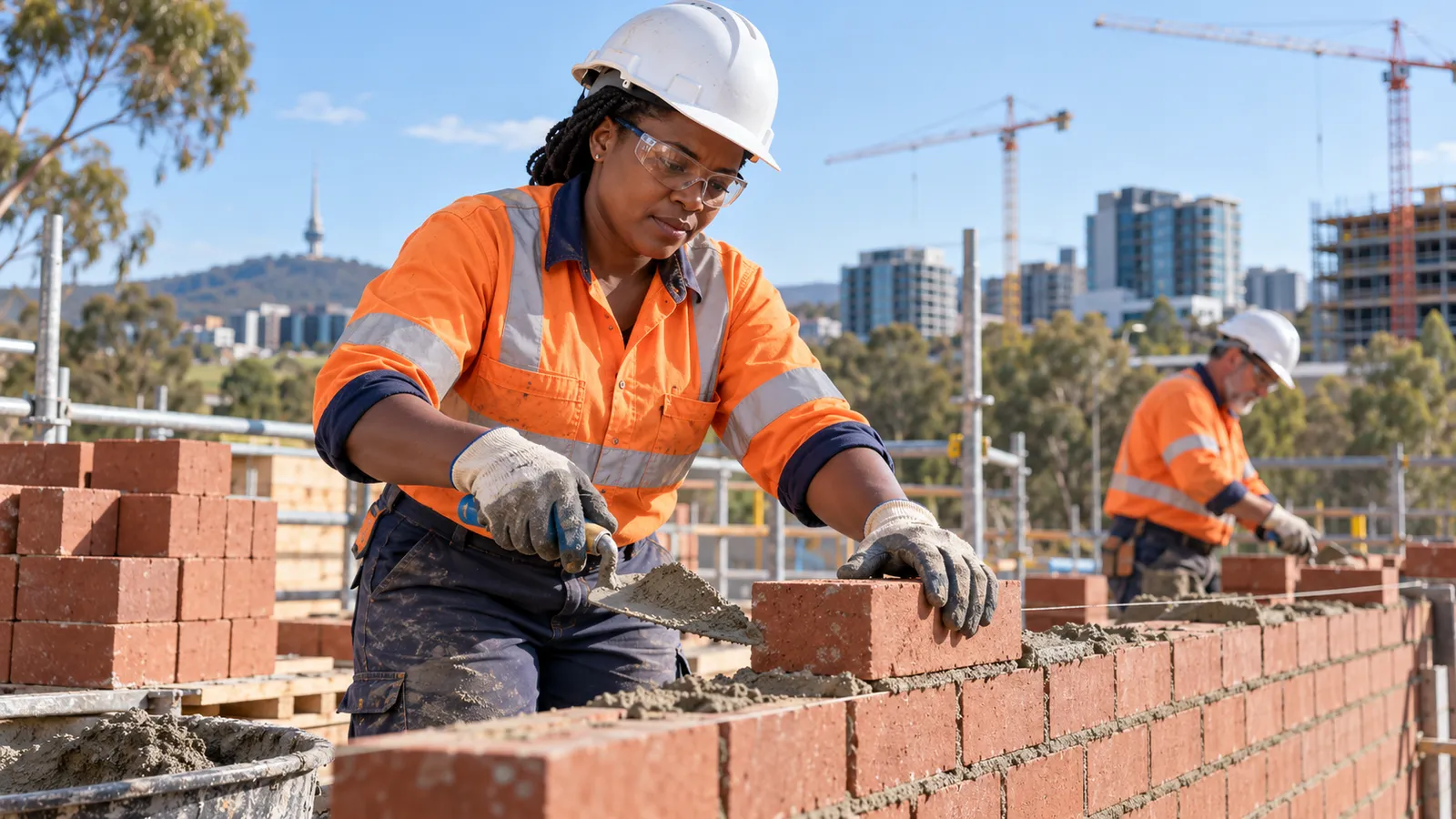
Canberra's skyline keeps rising while the workforce underneath it shrinks. Only seven people are training to be bricklayers in the ACT region. For skilled builders in Dar es Salaam or Arusha, the reasons behind that figure are as useful as the figure itself, because they show whether demand is a passing wobble or something longer lasting.
Force one: the pipeline is broken
Most bricklaying apprentices are trained through residential building work, and residential activity in the ACT is currently soft. Commercial and infrastructure projects, including the light rail expansion, still demand plenty of labour. Fewer residential jobs mean fewer employers prepared to commit to a four-year apprenticeship, so the training stream dries up even while the need rises.
Force two: retention is worse than recruitment
Far more apprentices begin than finish. The physical demands of the trade are one reason, and another is that apprentices spend too much time labouring instead of developing trowel skills. Many leave before they are genuinely useful on site.
Force three: an ageing workforce
On many sites, tradespeople over 40 are the norm rather than the exception. Without new arrivals, whether trained apprentices or skilled migrants, that expertise retires and is not replaced.
The numbers make the point. The construction workforce has grown by 10 per cent over a period in which apprentice numbers fell by 20 per cent. The ACT government's commitment to deliver 30,000 new homes by 2030 sits on top of that. You cannot hit a target of that scale with seven apprentices in the pipeline.
A regulatory quirk
Bricklaying is not a licensed occupation in the ACT. Anyone can legally lay bricks without proving a qualification, which has led to inconsistent workmanship on some sites. Employers who run established firms are not short of work. They are short of reliable people.
Turning the lesson into action from Tanzania
| What you need | How to prepare |
|---|---|
| Proof of training | Gather your VETA certificates and NECTA results; a VETA certificate does not automatically equal an Australian licence or skills assessment |
| Proof of experience | References, a project list and photographs of finished work |
| Clearance paperwork | If a police certificate is requested, the usual Tanzanian route is police clearance from the Tanzania Police Force |
| Advice | A migration agent registered with the Migration Agents Registration Authority (MARA); ask the fee first |
A trade CV that lists methods, materials and scale of work stands out. Build AI CV can help you prepare one.
What the shortage does not mean
A shortage is a signal, not a job offer. Employers who openly acknowledge a skills gap tend to hire faster, be more willing to sponsor and face less competition for placements, but each visa has its own requirements and each application stands on your own qualifications and experience. Bricklaying is also genuinely hard physical work, as Canberra's own apprentices will tell you. For someone who already has the training and the stamina, though, a market this undersupplied is where a skilled migration pathway tends to pay off fastest.
Common mistakes to avoid
- Reading demand in one city as a promise of work.
- Forgetting that a visa may still ask for evidence of your qualifications.
- Underestimating the physical toll of full-time bricklaying.
- Applying without a documented portfolio.
To go further, read our pieces on the construction worker gap, the builder shortage and why the crisis is about deployment.
Frequently asked questions
Is the shortage temporary?
The reasons are structural: a broken pipeline, poor retention and an ageing workforce, together with government housing targets.
What housing target is driving demand?
The ACT government has committed to deliver 30,000 new homes by 2030.
Can I lay bricks in the ACT without a qualification?
Locally, yes, because bricklaying is not licensed there, but that does not replace the requirements of any visa you apply for.
Does a VETA certificate count?
It is a strong start, but it does not automatically equal an Australian licence or skills assessment.
Who should I talk to before applying?
An agent registered with MARA for Australia or a licensed immigration adviser or lawfully exempt person for New Zealand, with fees agreed in writing.
Key takeaways
- Only seven trainees are in the pipeline, with construction up 10 per cent and apprentices down 20 per cent.
- Three forces drive the gap: a broken pipeline, weak retention and an ageing workforce.
- Bricklaying is unlicensed in the ACT, so evidence of skill matters.
- The 30,000-home target by 2030 keeps demand high.
- Prepare proof, check visa rules and use registered advice.
#bricklayers #apprenticeships #construction workforce #canberra #tanzania
 Will an Australian qualification lead to a skilled job? Findings Tanzanian students should read first
 One in three Australians would pick another career because of AI: lessons for Tanzanian job seekers
 Studying in Australia from Tanzania? The proposed end of the graduate visa, explained