Why site systems matter as much as site vacancies: a guide for Tanzanian builders eyeing Australia
News · 2026-08-20 · 4 min read
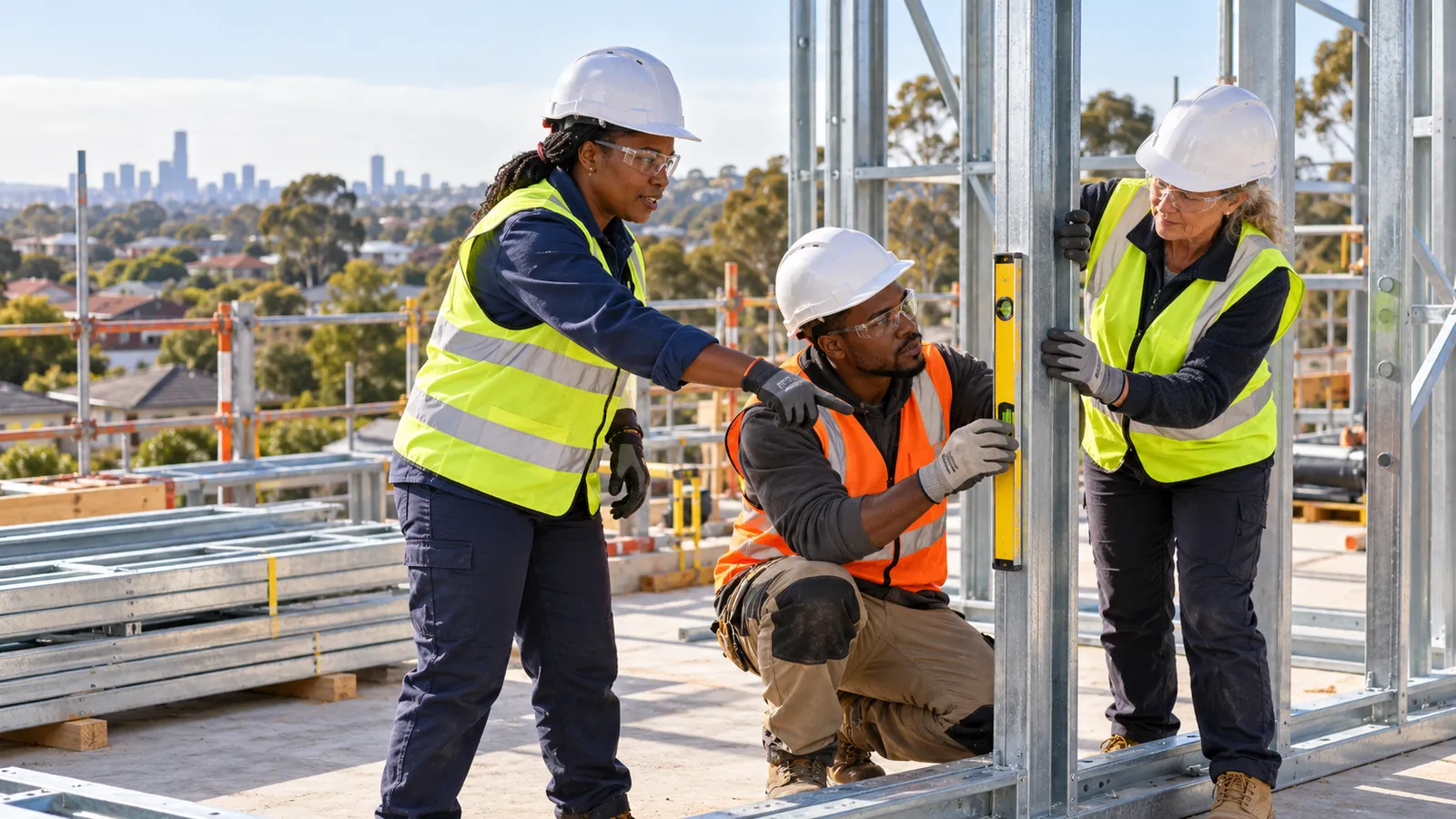
Imagine a skilled bricklayer from Dar es Salaam who lands a job in Australia and spends half a day waiting for a paperwork approval. The wage looks fine on paper, yet the working week is not. That is the picture behind a debate now unfolding among Australian industry leaders, and it is worth understanding before you accept an offer.
The shift in the argument
The old line was that Australian construction does not have enough workers, so the answer was more apprentices, more visas and more people. Industry leaders now say the issue is how effectively people are deployed, trained and supported. The shortage is real, but it is made worse when the system around the worker is inefficient.
What is wasting time
- Construction output per worker has stagnated and by some measures gone backwards, even as digital tools transformed other sectors.
- Outdated approval processes, layers of red tape and regulators mismatched to the scale of the projects they oversee reduce the value of each hour on site.
- Even the best imported talent is underused when the systems it joins are inefficient.
The window for reform
Following a period of extremely high construction spending, tighter budgets are forcing a rethink. Federal authorities are consulting on new national construction standards, and contractors, unions and clients are more aligned than usual on the need for change. If those standards are built properly, they could simplify how overseas qualifications are recognised, how onboarding is organised and how new arrivals fit into project teams. Migration agencies and sponsoring employers have a stake in making them practical.
What to look for if you are in Tanzania
When an employer offers a role, ask whether the project is well organised: how approvals work, what the contract says, how disputes are handled and what training comes in the first weeks. Prepare NECTA results, VETA certificates, references and photographs or records of finished projects. A VETA certificate does not automatically equal an Australian licence or skills assessment, so ask which applies to your trade. If a police certificate is requested, it comes from the Tanzania Police Force. A migration agent registered with the MARA is the right person to check your visa options, and the jobs page shows how employers present roles.
Standards alone are not enough
Earlier short-term fixes in construction produced a temporary bump but left the causes untouched. Unless the new standards come with enforcement, measurable benchmarks and consistent use, the same inefficiencies will return, and the same shortages will follow, because underused systems keep demanding more people to make up the lost time.
What a well-run project looks like
It has a clear contract, approvals that do not hold up the crew, a proper induction and a straightforward way to raise a problem. None of these appears in a job advert's headline, which is why it pays to ask. Workers who do so are not being difficult; they are doing the same due diligence the industry itself says it needs.
A lesson for recruiters and workers alike
Matching the right migrant workers to well-structured projects, with transparent contracts and clear dispute pathways, does more for the industry than raw numbers. For workers it means that the quality of the project is part of the offer, not a bonus.
Common mistakes with offers and expectations
The most common mistake is to compare offers by wage alone and ignore how the project runs. Another is to accept a contract with unclear terms. A third is to assume a Tanzanian certificate will be accepted without assessment. And many applicants send a generic CV; Build AI CV can help you highlight the tickets and results that fit the role.
Frequently asked questions
Is Australian construction still hiring migrants?
Leaders say migrants remain part of the answer, provided they are well deployed.
What does productivity mean here?
Output per worker, which has stagnated while other sectors have improved with digital tools.
Could standards make recognition easier?
If built properly, they could simplify how overseas qualifications are recognised.
Why are contracts mentioned?
Transparent contracts and clear dispute pathways are part of what makes a project well structured.
Is this only for Tanzanians?
No. Jobs are open to everyone; this guide speaks to readers in Tanzania.
Key takeaways
- The sector says deployment and systems are as important as headcount.
- Reform is being consulted on, but only enforced standards will help.
- Ask about approvals, contracts and training before accepting.
- Read also: the case for migration reform in construction and New Zealand's project pipeline.
#construction #australia #systems #tanzanian #builders #standards
 Is the door opening for Tanzanian builders? What Australia's tradie shortage figures really say
 Australia's housing target and the skills gap: where Tanzanian site supervisors and tradespeople fit
 Is Australia's builder shortage a door for Tanzanian tradespeople? What the closures really show