A tunnelling lesson for skilled workers: what New Zealand's rail project shows about demand for Tanzanian engineers
News · 2026-08-20 · 4 min read
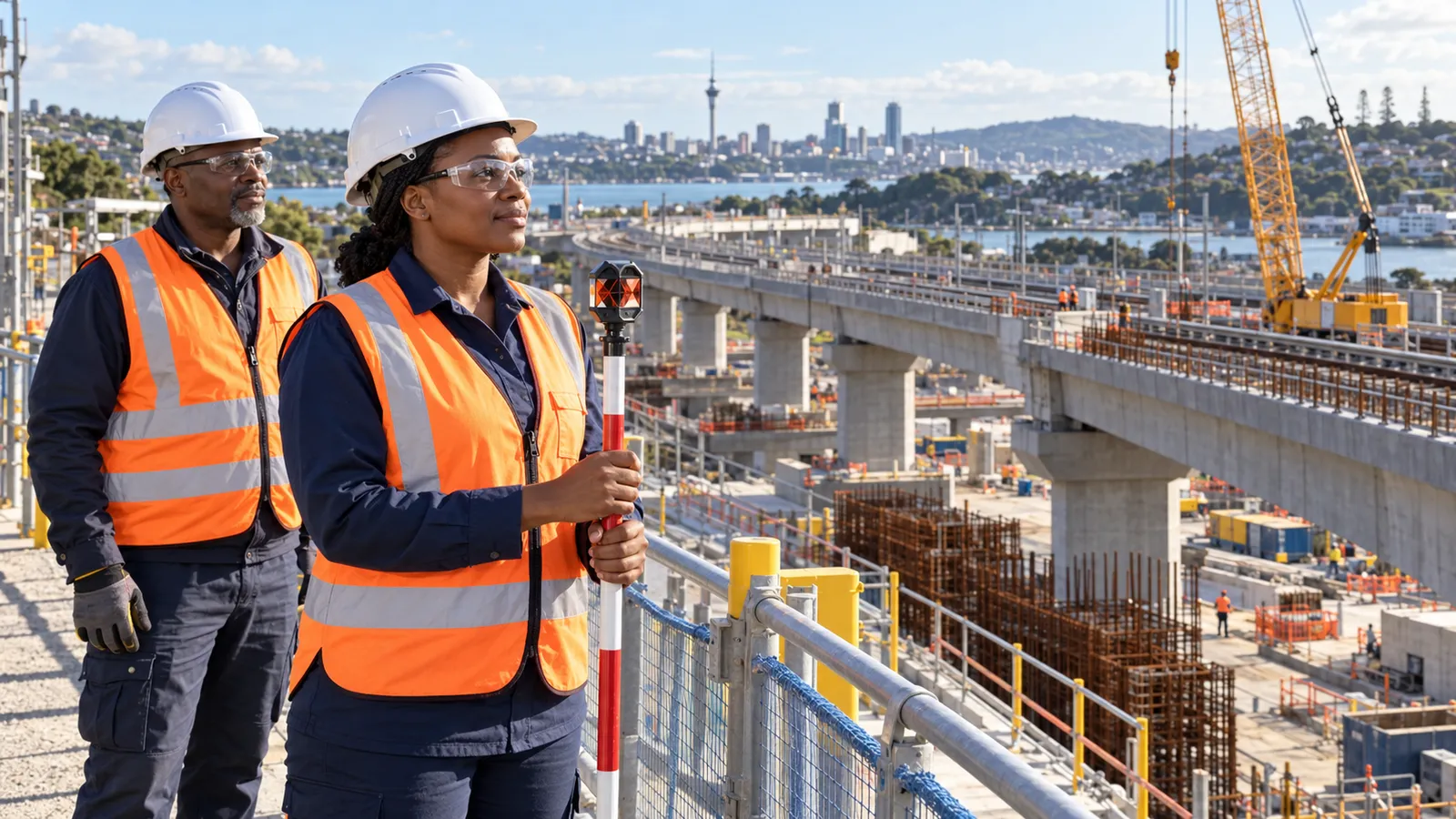
When the tunnelling finished on Auckland's City Rail Link, more than 100 tunnel boring machine operators left New Zealand. The industry keeps telling this story because it explains why a country with close to $200 billion of projects still struggles to find people. For engineers and tradespeople in Dar es Salaam or Arusha, it is also a useful way into the numbers.
The story in one paragraph
If New Zealand wants that tunnelling expertise again for a future Waitematā Harbour crossing, it will have to rebuild the talent pool almost from scratch. The lesson is that continuity of work, not only volume, keeps skilled people in a country. The profession's leaders say they need certainty: a pipeline that survives election cycles so people can plan careers around it.
The pipeline and the people
New Zealand's infrastructure sector carries close to $200 billion of committed and planned projects, from roads and rail to water systems and energy upgrades. Industry leaders admit there are not enough qualified people to deliver them, and funding alone does not change that. They argue infrastructure should be seen as a growth engine, which means the country needs capability as much as capital.
Why local workers are not enough
- Construction employment fell 3.5% in the year to March 2025, extending a two-year slide that cost around 16,000 jobs.
- About 46,400 New Zealand citizens left on a net basis in the year to September 2025, mostly for Australia.
- The sector needs around 2,300 new engineers each year. Engineering degrees make up a smaller share of graduates than the OECD average, and a third of new engineering graduates exit the profession within two years.
- One in three engineers working in the country trained overseas.
An infrastructure body's chief executive adds that cutting projects pushes skilled workers out of the industry or to countries with a steadier flow of work.
How demand is growing
MBIE's forecasts show infrastructure activity rising from $16.9 billion in 2024 to $19.6 billion by 2030, with total construction spend at $55.7 billion in 2025. In transport, officials estimated the sector would need about 65,000 workers by 2026/27, up from 40,000 a few years before, a rise they described as faster than the domestic workforce could supply.
What Tanzanian applicants can do
Treat the demand as a reason to prepare, not as a promise. Gather NECTA and degree or VETA records, references and project descriptions. Look up whether your profession must register in New Zealand, as a Tanzanian qualification does not equal a New Zealand licence automatically. Ask a licensed immigration adviser, or someone lawfully exempt, about visa options. If a police certificate is requested, apply to the Tanzania Police Force. And keep an eye on the jobs page to learn how employers describe roles.
Why the story matters beyond one project
The tunnelling example is useful because it is concrete: a visible team of specialists disappears when the work ends, and the cost of rebuilding it is high. The same logic applies to electricians, welders, engineers and managers. A pipeline that looks busy today still needs people to be there when each phase begins, so employers value those who can show readiness and commitment.
Common mistakes when reading a shortage story
Many readers assume that scarcity means a certain route in; it does not. Others forget that employers want people who can stay and contribute, not only arrive. A third error is a weak CV, so use something like Build AI CV to show tickets and project results. Finally, some readers miss the context from neighbouring markets, such as Australia's argument about who migrates.
Frequently asked questions
Why does the City Rail Link story matter?
It shows that skills leave when work stops, and are costly to rebuild.
How many engineers does New Zealand need?
Around 2,300 new engineers annually.
Are overseas engineers common there?
About one in three engineers working in New Zealand trained overseas.
Will employers sponsor everyone?
No. Competition for qualified people helps migrants, but each case stands on its own evidence.
Is this only for Tanzanians?
No. Jobs are open to everyone; this guide speaks to readers in Tanzania.
Key takeaways
- More than 100 tunnel operators left after one project ended, showing how fragile skills pools are.
- The pipeline is close to $200 billion and rising, while the workforce shrinks.
- Prepare evidence and registration steps rather than relying on the headline.
- Continue with Australia's construction productivity debate.
#tunnelling #new zealand #engineers #tanzanian #skills demand #infrastructure
 From 2025 to 2027: a timeline of New Zealand's engineering squeeze for Tanzanian engineers
 Welder in Dar es Salaam or Arusha? How New Zealand's residence routes treat trades
 Students arrive, citizens leave for Australia: reading New Zealand's migration numbers from Tanzania