Carpenter, electrician or plumber in Tanzania? Why Australia's 83,000-worker building gap deserves a closer look
News · 2026-09-30 · 4 min read
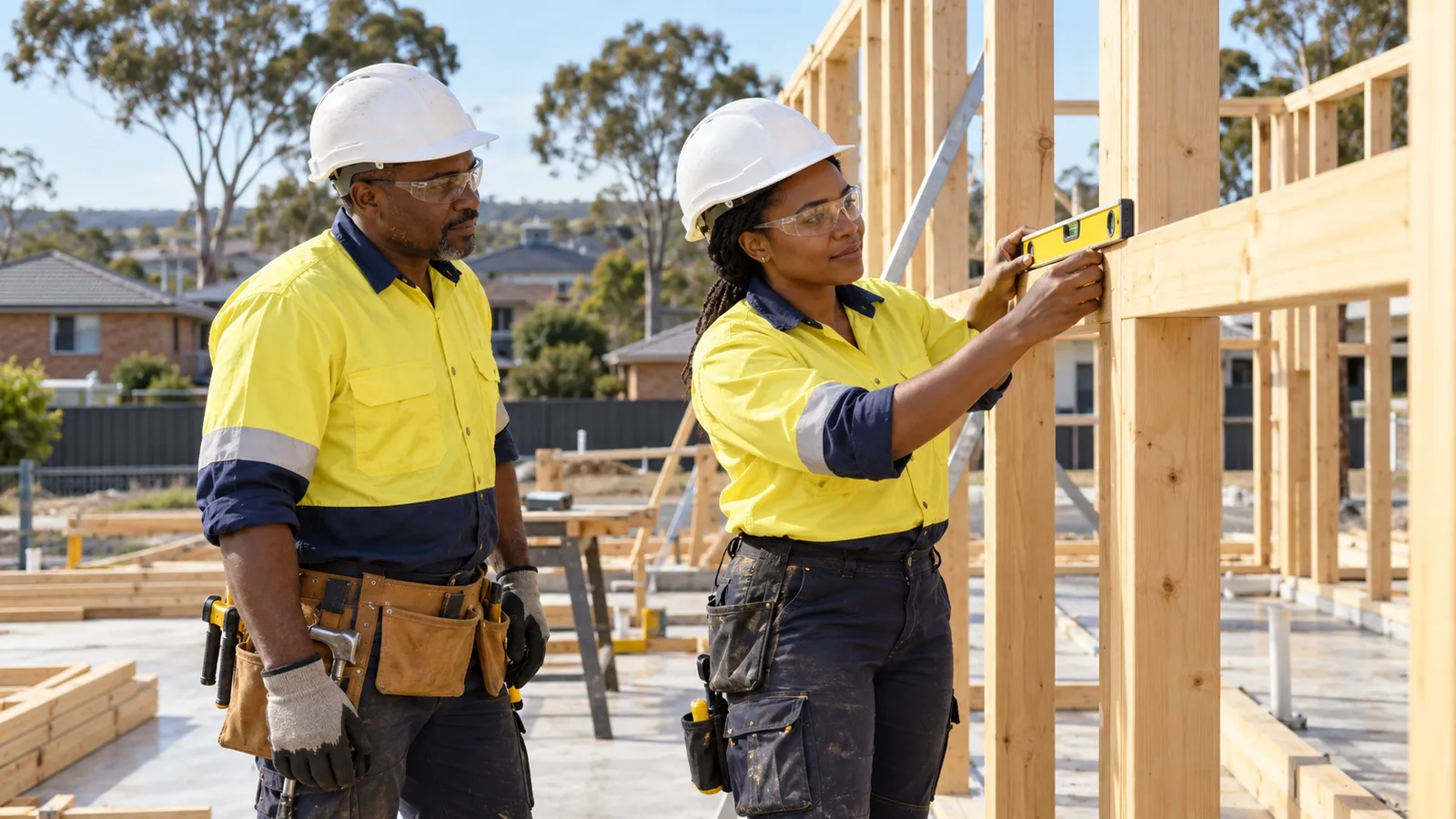
Australia wants to build more homes, but it does not have enough people to build them. An industry report puts the shortfall of skilled residential construction workers at about 83,000. If you work in a trade in Dar es Salaam, Arusha or Dodoma, the question is not whether the number is interesting but what it means for your own trade and what to do next.
First, what the report says
It was released at Parliament House ahead of National Tradies Day, and its main point is that land, finance and planning approvals are useless without qualified people. Every housing target depends on skilled workers being available. The shortage already slows delivery of new homes and raises building costs, making affordability harder to improve. Other sectors, namely infrastructure, renewable energy, technology and the digital economy, are hiring from the same pool, so shifting workers around only moves the gap.
Trade by trade
Carpenters
Residential building is the heart of the shortfall, and carpentry sits at its core. Keep photographs of finished work and employer letters that describe the type of building, your role and the standards you worked to.
Electricians
Electrical work is one of the trades where Australia may require a licence in addition to a qualification. A VETA certificate shows training, but it is not automatically an Australian qualification or licence, so ask how yours would be assessed.
Plumbers
The same logic applies: plumbing demand may reach across homebuilding and infrastructure, and the paperwork needs to show what you can do. Describe the systems you have installed and maintained.
The report suggests that carpenters, electricians, plumbers and other trade workers may find opportunities across several sectors, not only homes.
What the industry wants to change
Five priorities are on the table: raising the standing of trade careers, improving apprenticeship attraction and completion, supporting builders who train apprentices, strengthening pathways from school into trades, and investing in workforce capacity. They are mostly about the domestic pipeline and keeping young Australians in training until they finish. Because training takes years and the gap is large, skilled migration is likely to stay part of the conversation.
A practical plan
- Collect NECTA results where relevant, VETA certificates and employer letters.
- Have your skills properly assessed, which Australian trade careers treat as a key early step.
- Write a strong English CV; Build AI CV offers a quick way to start.
- Check occupation lists and visa settings on official pages, as they change.
- Consult an Australian migration agent on the MARA register before paying anyone.
For assessment background, visit RPLDirect. See also the construction skills crisis and why tradespeople are getting a closer look, and browse current vacancies.
Questions to ask yourself this month
- Can I show, on paper, what I have built, wired or installed, and for whom?
- Do I know which body would assess my trade, and what it asks for?
- Is my English CV clear enough for an employer who has never heard of my town or training school?
- Have I looked at current occupation lists and visa settings, rather than relying on a friend's account from years ago?
None of these questions requires money, only time and honesty. Answering them gives you a realistic picture of how far you are from an application, and that picture is worth more than any headline number. It also protects you from paying for services you do not need.
Common mistakes that cost time
- Taking a shortage number as a job offer.
- Treating a Tanzanian certificate as an Australian licence.
- Describing your experience in general terms instead of with specifics.
- Using unregistered advisers.
Frequently asked questions
Does Australia need only builders?
Homebuilding is one need among several, and demand extends to infrastructure, renewable energy, technology and digital projects.
Will sponsorship follow?
Businesses struggling to find staff may be more open to sponsoring skilled workers, but each case depends on the employer and the visa rules.
Is a skills assessment necessary?
Qualifications matter in Australia, so getting your skills assessed is a key early step.
Could rules change?
Yes, so check requirements before making decisions.
Key takeaways
- The industry puts the residential construction shortfall at about 83,000 skilled workers.
- Several sectors compete for the same trades.
- Assessment, licence and evidence questions come first.
- Verify current rules and use a MARA-listed adviser.
#building gap #carpenters #electricians #plumbers #australia
 Could a trade matter more than a degree for Australia? What Tanzanian plumbers and carpenters should check
 72,000 more tradespeople by 2030: how should Tanzanian electricians read Australia's shortage?
 Will an Australian qualification lead to a skilled job? Findings Tanzanian students should read first