72,000 more tradespeople by 2030: how should Tanzanian electricians read Australia's shortage?
News · 2026-09-05 · 4 min read
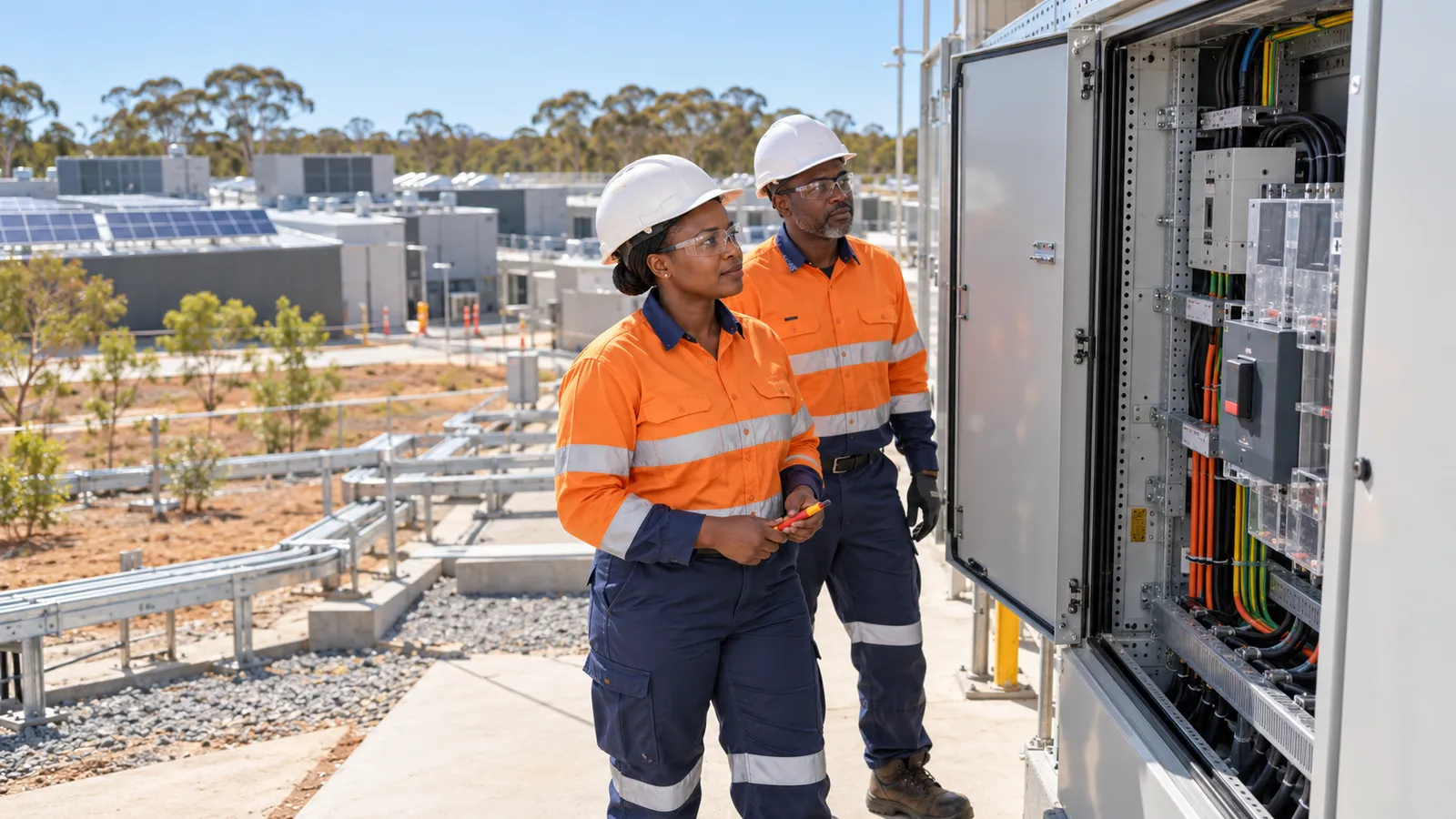
Numbers first. Australia needs roughly 72,000 additional electricians, technicians and related tradespeople by 2030, according to a new industry skills report. A year earlier the same organisation forecast 42,000. Data centres drive most of the jump: the pipeline is worth around $150 billion by 2030 on Treasury figures, with more than 160 data centres operating and another 130 planned, and the sector alone could need an extra 13,000 energy trades workers. Add the Housing Accord target of 1.2 million new homes and the renewable energy transition, and you have three national priorities sharing one workforce.
What this means for the people already there
The shortage plays out as a wages war. Employers lose bids for staff, apprentices are poached by infrastructure projects before finishing training, and small contractors lose experienced workers to data centre jobs paying more than they can. Apprenticeship completion is a solid 70%, but still not enough, and industry bodies want hiring quotas on major projects and compensation schemes for firms that lose trained staff.
What it can mean for tradespeople abroad
When local training cannot keep pace, employers and policymakers look outward. For a Tanzanian electrician or energy technician in Dar es Salaam or Arusha, the possible advantages are:
- Demand that looks structural rather than tied to one election or project.
- More than one entry point, with data centres, homes and renewables needing similar core skills.
- Regional and project-based work, since large builds often sit outside the big cities where competition for visas and jobs can be less intense.
- Employers with a direct financial reason to look at skilled visa pathways when they cannot fill roles locally.
None of this is a promise, and each advert sets its own terms.
The checks that matter more than the headline
A VETA certificate shows your training, but it never automatically equals an Australian licence, skills assessment or registration. Some electrical work needs a state licence, so ask early. RPLDirect explains how qualifications and skills assessment work for Australia. Keep evidence of site work, supervisors' letters and tickets in order, and consider a verified profile: Talent Tabloid is optional, and a verified Talent Tabloid profile lets employers check your experience and can help your application stand out. If you will need police clearance, it comes from the Tanzania Police Force.
Policy signals to track over 12–18 months
- Workforce guidelines for data centre developers, in place since March, which push operators to invest in local training.
- Occupation list revisions, which a shortfall this large tends to feed.
- Training incentives such as the $10,000 clean energy apprenticeship incentive.
- Regional projects, which may fit regional skilled visa streams.
Read next: why Australia's construction crisis is a talent deployment problem and why skilled trades are becoming a smart migration pathway. Browse roles on the jobs page.
Turn the forecast into a personal file. Put your VETA certificate first, then supervisors' letters that describe the installations you worked on, whether commercial, industrial or solar, and dated proof of your years on site. A file that an employer or adviser overseas can read in minutes shortens every later step. Keep it up to date, because a shortage story can change quickly while your paperwork stays the same.
It also helps to say plainly which part of the sector you know. Data centre fit-out, housing wiring and solar or other clean energy installation are different kinds of work, and employers read an application faster when it says which one you have done and for how long.
Common mistakes with shortage headlines
- Reading a national forecast as a job offer.
- Skipping qualification assessment until a visa conversation starts.
- Choosing a location only by the capital city name.
- Using an adviser who is not a migration agent registered with MARA.
Frequently asked questions
Is the 72,000 figure for electricians alone?
It covers electricians, technicians and related tradespeople.
Why did the forecast rise from 42,000?
Largely because of data centre construction.
Do I need a licence as well as a VETA certificate?
Assessment and any state licence are separate steps from your certificate.
Do apprentices complete training?
Completion is a solid 70%, which is still short of demand.
Where should I look for work?
Start with current adverts, and note that many builds are regional.
Key takeaways
- The shortage is roughly 72,000 workers by 2030, up from 42,000.
- Data centres, housing and renewables compete for the same trades.
- Your VETA certificate needs assessment before it counts.
- Follow guidelines, lists, incentives and project locations.
#tradespeople #australia #electricians #trades shortage #tanzania #skilled migration
 Tanzanian students and Australia's tighter student visa plan: what to prepare, and for whom
 Is Australia's builder shortage a door for Tanzanian tradespeople? What the closures really show
 A tradie crisis across the Tasman: how to read New Zealand's plumbing shortage from Dar es Salaam