From 57,000 to 45,000 and from 31,000 to 5,000: the farm labour numbers behind Australia's visa shake-up
News · 2026-09-25 · 5 min read
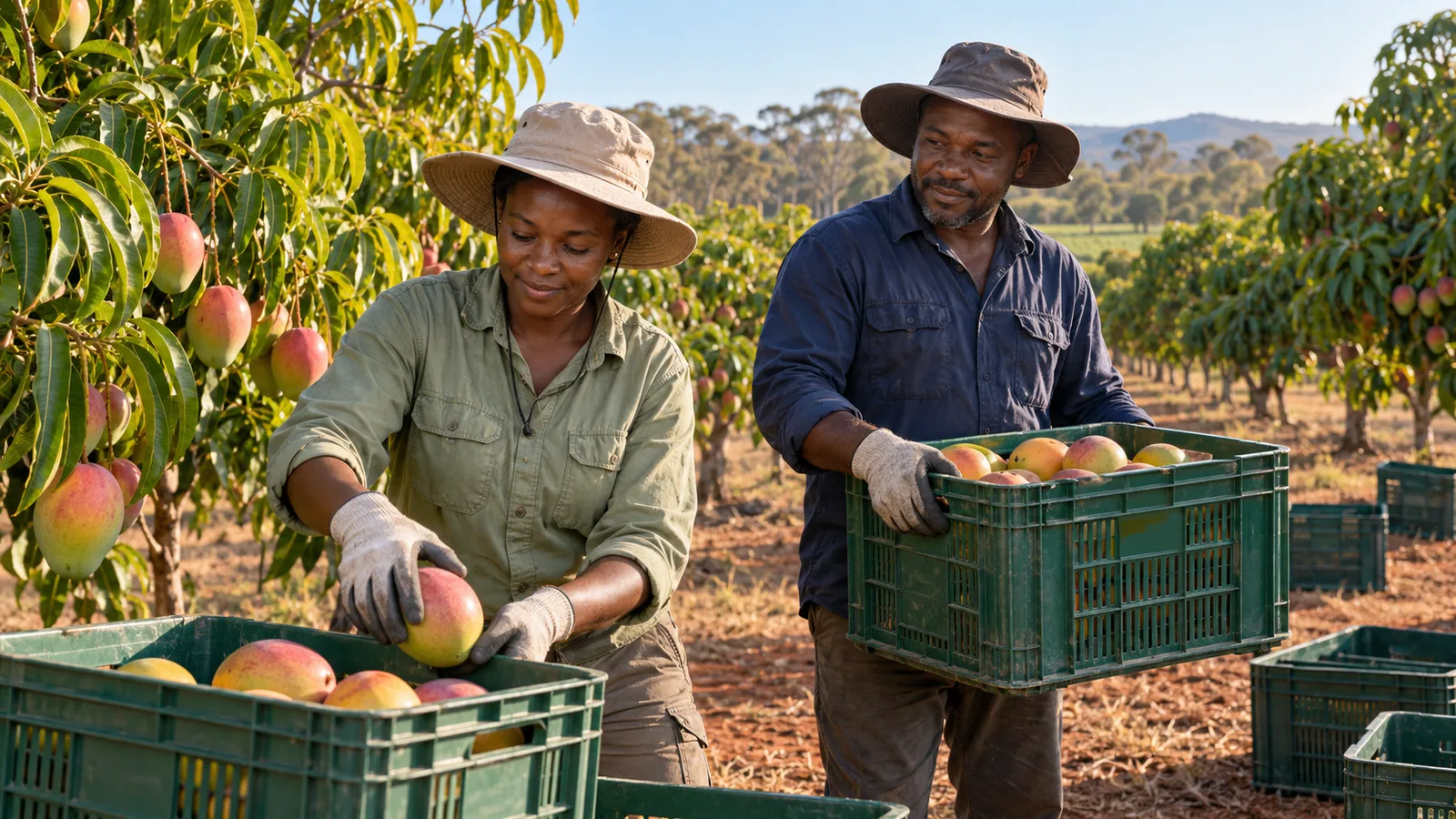
Four numbers explain why Australian farmers are worried: 57,000, 45,000, 31,000 and 5,000. They come from the changes to the Working Holiday Maker programme announced in late September. Tanzania has no working holiday arrangement with Australia, so readers in Dar es Salaam and Arusha cannot use this visa, but the numbers show how that labour market is changing.
The numbers
| Item | Before | After |
|---|---|---|
| Second-year places | 57,000 | 45,000, by ballot |
| Third-year places | 31,000 | 5,000 |
| Regional or remote work for a second year | 88 days earned an extension | 88 days now leads to a draw |
| Eligible countries with paused applications | Not applicable | 24 of 29 |
Why the numbers matter to farms
Farms that harvest mangoes, berries and citrus rely heavily on mobile, short-term labour. With harvest windows for citrus and berries opening within weeks in some regions, and processing times stretched from days to roughly three months, growers could be short-handed whatever the ballot does. Industry groups warn that the shift from "earn it" to "enter the draw" may push backpackers toward more visa-secure destinations.
Why small farms are hit hardest
Large farms typically draw workers from the Pacific Australia Labour Mobility (PALM) scheme, which is separate and more structured. Smaller, family-run farms without year-round work are the ones that have depended on backpackers. PALM does not simply replace them, because its workers are usually tied to longer placements, while working holiday makers move quickly from one region's harvest to the next.
The number still missing
Agriculture is being added to the skilled worker visa list, but no one has yet said whether horticulture roles will be included or what qualification thresholds will apply. Until that appears, the list tells you little about any individual job.
What a Tanzanian reader should do
- Ignore claims that Tanzanians can join the working holiday ballot.
- Watch the official Australian immigration pages for the skilled list detail.
- Collect evidence of farm or agribusiness experience: NECTA results, VETA certificates, employer letters and references.
- Remember that a Tanzanian qualification never automatically equals an Australian licence, registration or skills assessment.
- Ask for police clearance from the Tanzania Police Force only when a visa requires it.
- Choose a migration agent on the MARA register for Australian advice.
A CV that names crops, machinery and results is helpful, and Build AI CV can help you write one. Compare real adverts on our jobs page, and read the farm visa fix for harvest season and the new dependant visa rules for students.
From "earn it" to "enter the draw"
The old logic was simple. A backpacker completed 88 days of regional or remote work and could count on a second-year visa. That certainty is disappearing. The new logic makes the same work an entry ticket to a draw. For farm operators who built harvest schedules around a steady supply of returning workers, that is a major change, and it explains why industry groups speak so strongly about it.
It also explains why advice for employers has changed. Early, well-documented regional work will matter more under a ballot, and employers are being told to look beyond a single source of workers. Exploring PALM partnerships, following the skilled visa detail as it emerges and allowing longer lead times for visa processing are no longer optional. They are immediate necessities for anyone running a farm in Australia.
What to take from it as a Tanzanian reader
Numbers like these are easy to misuse. A sharp fall in places does not tell you anything about whether a Tanzanian applicant can find an employer-sponsored role, and a skilled list that now includes agriculture does not tell you which jobs are covered. What the numbers do give you is a sense of timing and pressure. Seasonal demand is real, harvest calendars are fixed by nature, and the system that supplies labour is under strain.
Use that insight to prepare calmly. Spend your time on documents, evidence and understanding the official rules. Spend your money only on services you can verify. Avoid anyone who describes the changes as a gap you must jump through immediately.
Common mistakes with these numbers
- Reading cuts as bans.
- Mixing up PALM and working holiday visas.
- Taking an announcement as a vacancy.
- Paying deposits to people who are not registered.
Frequently asked questions
Which visa year loses most places?
The third year, falling from 31,000 to 5,000.
Why are applications from 24 of 29 countries paused?
The pause existed before the announcement and added to processing delays.
Will the harvest be affected?
Industry bodies expect a tight Christmas harvest.
Should I wait for the skilled list?
Prepare documents now and read the official detail when it is released.
Key takeaways
- Second year 57,000 to 45,000, third year 31,000 to 5,000.
- Processing has stretched to roughly three months.
- PALM is a different pathway and not a direct substitute.
- Skilled list detail for agriculture is still awaited.
#australia farm visa #tanzania #working holiday numbers #harvest #palm scheme
 Three questions Australian growers are asking about the harvest visa fix, and what Tanzanians can take from it
 Whose problem is a visa pause? The politics behind Australia's unannounced working holiday freeze
 Will an Australian qualification lead to a skilled job? Findings Tanzanian students should read first