Should a welder in Dar es Salaam watch Australia? A close reading of the new fabrication survey
Tips · 2026-09-30 · 4 min read
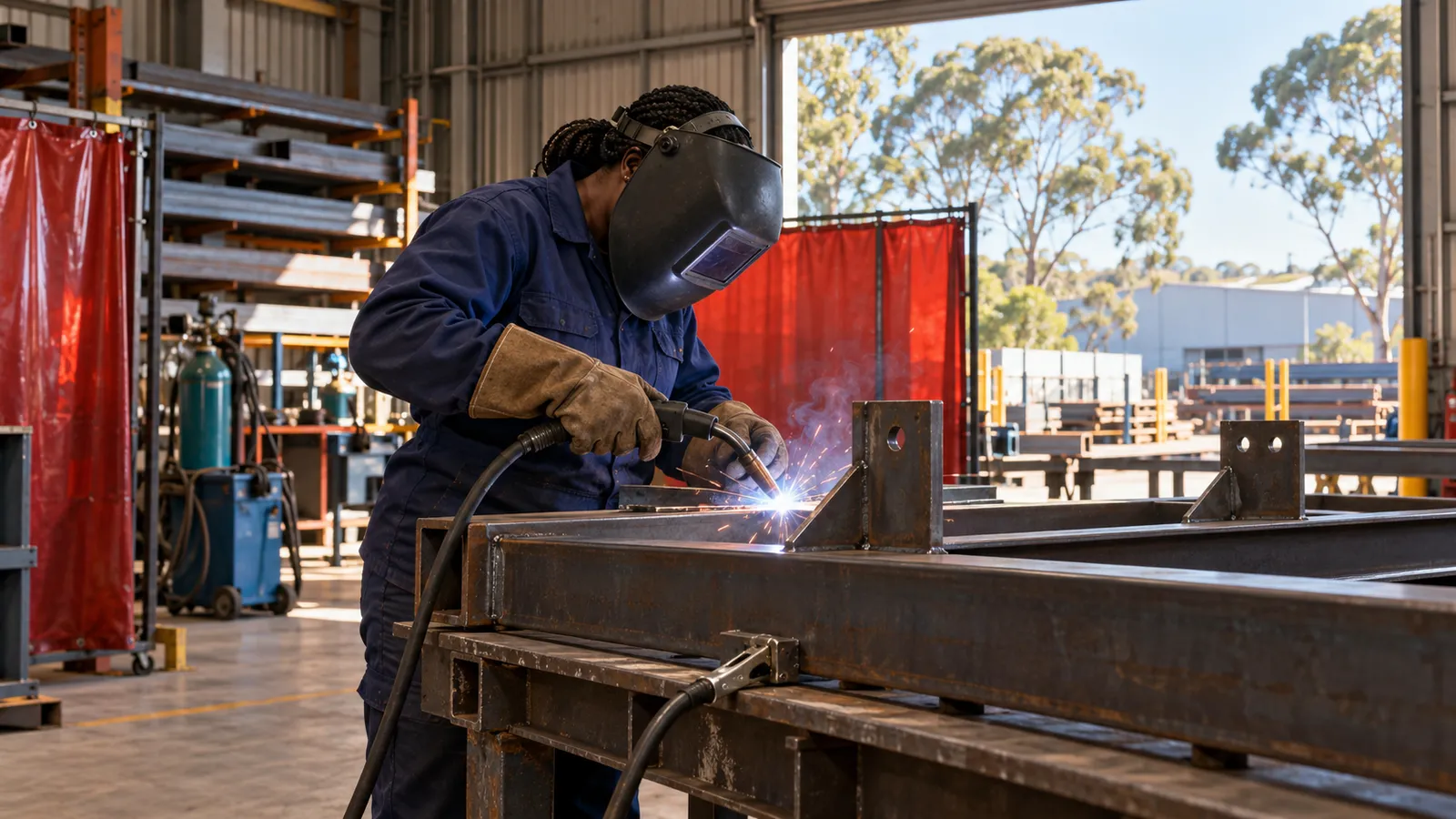
Should a welder in Dar es Salaam, Arusha or Mwanza keep an eye on Australia? Possibly, and a new industry survey explains why. It also explains why the answer is "watch and prepare", not "pack your bags". Let us walk through it as a series of plain questions.
Is there really a shortage?
Respondents think so. 89.2 per cent said Australia lacks enough qualified welders for the infrastructure and defence work ahead. That sits oddly beside other results. Six in ten had three months or less of confirmed work, one in five had none confirmed, and almost 60 per cent of fabrication workshops were running below 75 per cent capacity. The reading is a mismatch: workshops lack projects and also lack skilled staff. Local firms, industry leaders say, have the capability but not the access to work.
What do firms want from government?
Stronger local content rules in public projects, independent verification of fabricated steel wherever it is made, support for a proposed national fabrication authority, help for small and medium-sized firms with advanced manufacturing technology, and contract awards based on whole-of-life value instead of the cheapest upfront price. Underneath is a compliance problem: 71.4 per cent said imported fabricated products at least sometimes fail Australian standards, and 53.6 per cent said often or very often.
Are the firms healthy?
Under pressure, yes. Higher energy prices hit 82.1 per cent and higher material costs 78.5 per cent, but only 28.5 per cent raised prices, and nearly 40 per cent saw margins fall. Still, half increased technology investment, 42.8 per cent trained staff more and 39.2 per cent spent more on research and development. Investing employers are generally the better ones to work for.
What should a Tanzanian welder do with this?
First, treat it as evidence that Australian demand for skill is long-term. Second, know that standards are central. Gather welding test records, your VETA certificate and letters from employers describing the processes, materials and codes you worked to. A VETA certificate shows training, but it does not automatically equal an Australian licence or skills assessment. Third, understand that training is part of the picture; the industry wants more apprenticeships, pre-apprenticeship programmes, TAFE pathways and industry-led training, and further study may help with assessment or licensing. Fourth, the trade is trying to earn more respect: 79.5 per cent felt welding does not get what it deserves, which could improve pay and conditions over time.
Present your record clearly. Build AI CV can help you build an English CV, and RPLDirect explains how prior learning can be recognised. For more context, read why construction skills policy is under pressure, why skills can outweigh degrees and browse the jobs page.
How to prepare, step by step
Start with a folder. Put in your certificates, welding test results and any letters from supervisors, and add a plain list of every job: employer, dates, materials, processes and codes. Next, write a short summary of what you can do alone and what you do under supervision, because assessors and employers will ask. Then think about gaps. If the survey is right that standards matter, courses in inspection, drawing reading or a specific process may add value. Finally, set a calm review date. Rules, occupation lists and survey results all move, so revisit your plan every few months instead of acting on one headline.
Common mistakes to avoid
- Taking "shortage" to mean "visa on the way". Skilled visa rules and occupation lists change often.
- Failing to check current Skills in Demand visa settings and skills assessment requirements for your trade with the Department of Home Affairs.
- Describing work as "general welding" without detail.
- Paying an adviser who is not on the MARA register for Australian migration advice.
Frequently asked questions
Will Australia need welders for years?
Defence, infrastructure and renewable energy projects take years, and respondents say qualified people are the bottleneck.
Why do workshops have spare capacity?
Many lack confirmed work, even while short of qualified staff.
Does the survey mention visas?
No. Visa eligibility is a separate matter to check on official pages.
Is a Tanzanian certificate recognised?
That depends on assessment. Do not assume equivalence.
Key takeaways
- Respondents report a shortage of qualified welders and uneven project pipelines.
- Standards, compliance and documentation are central.
- Training and assessment may be part of any move.
- Check current visa settings and take advice from a MARA-listed agent.
#welders #australia #fabrication #trades #migration opportunity
 Could a trade matter more than a degree for Australia? What Tanzanian plumbers and carpenters should check
 AI is trimming desk jobs abroad: which skills should Tanzanian applicants build before moving to Australia?
 Degree or trade? Why a nationally recognised Certificate III may suit Tanzanian students heading to Australia