Sponsored to work on a New Zealand orchard? Training may change under you: a note for Tanzanian workers
News · 2026-09-01 · 4 min read
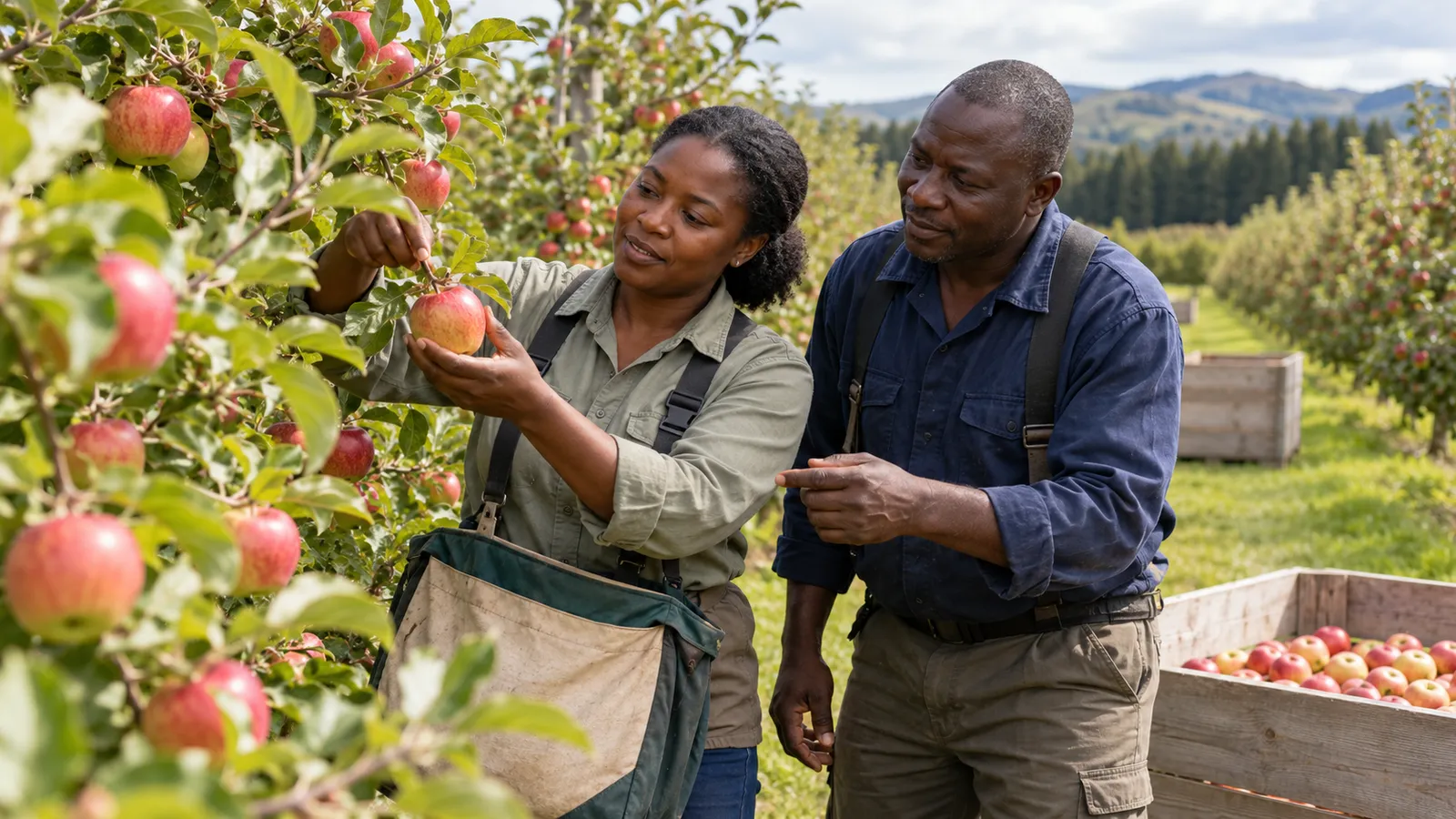
Suppose you are offered a job in a New Zealand packhouse, and part of the appeal is the chance to gain a recognised qualification while you work. Whether that chance exists depends on a restructure that is under way in the horticulture training system. This note explains it for workers in Dar es Salaam, Arusha and elsewhere in Tanzania, and for the employers who sponsor them.
Who is taking over
From 1 January 2026, work-based training in horticulture will move out of Te Pūkenga and into a new, temporary body, the Food and Fibre Industry Skills Board. Between now and the end of 2027, the industry training organisation will keep delivering in a holding pattern for around 1,500 current enrolments. By June 2027 no new enrolments will be accepted under the current arrangement. By 2028, responsibility for work-based learning is expected to pass to regional polytechnics and private providers, with the Skills Board limited to setting standards.
The visa question
Among the proposals in the new workforce capability strategy is one to restore training eligibility for workers on work visas. Today, visa holders find it harder to upskill through recognised work-based qualifications, even though migrant labour holds up much of New Zealand's fruit and vegetable production. If eligibility returned, workers could progress from general labour to better-paid, more skilled roles, and employers would keep trained staff instead of constantly starting again.
Why this is urgent for the industry
Work-based enrolments in fruit and vegetable training fell by roughly two-thirds between 2021 and 2024. With an ageing domestic workforce and chronic shortages, employers lean heavily on international workers. The risk now is that regional polytechnics and private providers choose only the most profitable courses. Specialised pathways could quietly vanish, including those that give migrants a route to skilled visa categories or residence tied to recognised trade qualifications.
For sponsoring employers
A practical question follows: if your training partner cannot promise a pathway through 2027 and beyond, what is your contingency? A cadetship programme piloted in Pukekohe, now expanding to the Bay of Plenty, offers one idea. It pairs apprentices with peer cohorts, shared study sessions and a dedicated advisor who manages training compliance for the employer.
What this means day to day
For a worker on the ground, a restructure like this is easy to miss until it affects a course or a supervisor's plans. A trainee halfway through a qualification may find the provider changing. A newcomer who hoped to start a course may learn that enrolments have closed. Asking early what training exists, who delivers it and what it leads to is the simplest protection, and employers who answer clearly are usually the ones who have thought it through.
A worker's checklist from Tanzania
- Treat the training change as one more reason to read job offers carefully and ask what training, if any, is on offer.
- Check what a role actually needs. A NECTA result or a VETA certificate never automatically equals a New Zealand qualification, skills assessment or registration.
- Gather proof of your experience, and request police clearance from the Tanzania Police Force only if it is requested.
- Speak to a licensed immigration adviser, or a lawfully exempt person, before you pay anyone.
Common mistakes in this area
Workers sometimes assume that training eligibility comes with any visa. It is not, and it is the subject of a proposal. Employers sometimes assume their present provider will still be there in 2028. Applicants also give too little detail. A clear record of crops, tasks and teams helps, and a short self-introduction video from SelfIntroVideo can be one way to let an employer hear you describe your experience. Pair it with a strong CV.
Frequently asked questions
What body takes over work-based training?
The Food and Fibre Industry Skills Board, a temporary body, from 1 January 2026.
How many people are currently enrolled?
Around 1,500 current enrolments nationwide.
When will new providers deliver training?
By 2028 delivery is expected to shift to regional polytechnics and private providers.
Could visa holders gain access to training?
A proposal would restore eligibility, but it is not confirmed.
What else is worth reading?
Try the AI shake-up article and the big projects explainer, then check current jobs.
Key takeaways
- Work-based horticulture training moves to a temporary board from 1 January 2026.
- No new enrolments by June 2027; polytechnics and private providers by 2028.
- Enrolments fell roughly two-thirds between 2021 and 2024.
- Restoring visa-holder eligibility is proposed only.
- Take advice from a licensed immigration adviser and read offers closely.
#horticulture #visa holders #new zealand #sponsoring employers #tanzania
 From 2025 to 2027: a timeline of New Zealand's engineering squeeze for Tanzanian engineers
 Students arrive, citizens leave for Australia: reading New Zealand's migration numbers from Tanzania
 New Zealand is changing who it hires: three Tanzanian profiles, and where each stands